


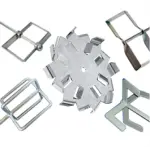
In various industries, achieving optimal consistency and blending of materials is critical to the production of high-quality products. Whether you’re manufacturing food, chemicals, pharmaceuticals, or cosmetics, industrial mixers play a crucial role in ensuring the uniformity and consistency of the final product. These machines are specifically designed to handle different types of materials, from powders to liquids, and in some cases, even viscous substances.
What Are Industrial Mixers?
Industrial mixers are large machines used in manufacturing processes to combine different materials into a uniform mixture. These machines are employed across a wide range of industries, and the types of mixers used depend on the specific material properties and production needs. The goal of an industrial mixer is to achieve the required level of consistency and quality in the shortest time possible, optimizing efficiency and reducing operational costs.
Types of Industrial Mixers
-
Batch Mixers
Batch mixers are typically used for smaller quantities of material. They work by mixing all ingredients within a single batch, ensuring that the mixture is homogeneous before moving on to the next phase of production. Batch mixers are ideal for industries where production runs are smaller and where flexibility is required for different formulations.
Applications:
-
Food and beverage production (baking, candy, and sauces)
-
Pharmaceuticals (mixing active ingredients)
-
Cosmetics (creating consistent creams, lotions, and other products)
-
-
Continuous Mixers
Continuous mixers are designed for high-volume production and provide an uninterrupted mixing process. These mixers continuously introduce raw materials and deliver a constant flow of mixed products. They are used when large quantities of material need to be processed efficiently, without stopping for reloading.
Applications:
-
Chemical processing
-
Cement and construction material production
-
Plastic and polymer industries
-
-
High-Shear Mixers
High-shear mixers are specialized machines used to achieve high-speed mixing. They are ideal for blending liquids with solids, emulsions, or dispersions. These mixers operate at high speeds and generate strong shear forces that break down particles, ensuring a smooth and uniform blend.
Applications:
-
Emulsion formation (cosmetics, food)
-
Polymer processing
-
Pharmaceutical mixing
-
-
Ribbon Blenders
Ribbon blenders are horizontal machines with a series of intertwined ribbons inside the drum. These ribbons provide efficient mixing for both dry and wet ingredients. The design allows for the even blending of powders, granules, and pastes.
Applications:
-
Dry powder blending in food production (flour, spices, and seasonings)
-
Animal feed production
-
Chemical mixing
-
-
Planetary Mixers
Planetary mixers feature a unique design where the mixing tools rotate around both their own axis and the axis of the vessel. This type of mixer ensures that materials are thoroughly mixed from all directions, making them ideal for both heavy and light-duty mixing tasks.
Applications:
-
Food manufacturing (batter and dough mixing)
-
Paints and coatings
-
Cosmetics and personal care products
-
-
Drum Mixers
Drum mixers are used for blending materials inside rotating drums. These machines are often used in industries where continuous or batch mixing is required, and they are typically employed for materials that require uniformity, such as aggregates, dry powders, and cement.
Applications:
-
Construction (concrete mixing)
-
Asphalt and road materials
-
Animal feed production
-
Benefits of Industrial Mixers
-
Improved Product Consistency
Industrial mixers ensure that materials are blended to a precise, uniform consistency, which is essential in industries like food, pharmaceuticals, and cosmetics, where product quality is critical. -
Increased Production Efficiency
The use of industrial mixers in manufacturing processes allows for higher productivity by reducing mixing time and increasing throughput. -
Flexibility
With the various types of industrial mixers available, manufacturers can choose the best machine for their specific materials, ensuring that they achieve the desired quality in their final products. Many machines are adaptable to handle different product formulations, offering greater flexibility for production lines. -
Cost-Effectiveness
By automating the mixing process, industrial mixers reduce the need for manual labor, lowering operational costs and minimizing human error. Additionally, better efficiency often leads to reduced energy consumption. -
Improved Safety and Hygiene
Industrial mixers are designed to meet strict safety and hygiene standards. These machines help to reduce contamination risks by providing a sealed environment for mixing, ensuring that the final product remains clean and uncontaminated.
Key Applications of Industrial Mixers
-
Food and Beverage Industry
Industrial mixers are essential in food production for creating uniform textures, flavors, and consistency in products like sauces, beverages, jams, and bakery items. They are also used to create blends for processing dairy, meats, and confectionery. -
Pharmaceutical Industry
In pharmaceuticals, industrial mixers ensure that active ingredients are evenly distributed in medicines, creams, and ointments. Precision in mixing is crucial for ensuring correct dosage and effectiveness of the product. -
Cosmetics Industry
The cosmetic industry relies heavily on industrial mixers for producing creams, lotions, shampoos, and other products. Mixers must be capable of handling different viscosities and achieving uniform mixtures to maintain product quality. -
Chemical Industry
Industrial mixers in chemical manufacturing help to blend raw materials, solvents, and chemicals to create a wide range of products, from paints and coatings to cleaning agents and adhesives. -
Construction and Aggregate Industries
In construction, mixers are essential for producing concrete, asphalt, and other building materials that require consistent blending to ensure structural integrity.
How to Choose the Right Industrial Mixer for Your Needs
When selecting an industrial mixer, several factors need to be considered to ensure optimal performance:
-
Material Properties: The type of material you’re mixing, including viscosity, particle size, and density, will determine the type of mixer you need.
-
Production Volume: High-volume production requires continuous mixers, while smaller batches may be more suitable for batch mixers.
-
Mixing Time and Consistency: Depending on the process, you may need a mixer that provides gentle blending or one capable of high shear forces to achieve a finer, smoother blend.
-
Maintenance and Durability: Choosing a mixer that is easy to maintain and built to last can save time and money in the long run.
Conclusion
Industrial mixers are vital tools in a wide range of manufacturing processes, ensuring that products meet the necessary quality standards and production volumes. By selecting the appropriate type of mixer for your specific industry needs, you can enhance both efficiency and product consistency, which ultimately leads to higher customer satisfaction and reduced operational costs.
Whether you’re in food production, pharmaceuticals, cosmetics, or chemicals, understanding the different types of industrial mixers and their applications is essential for optimizing your production processes.